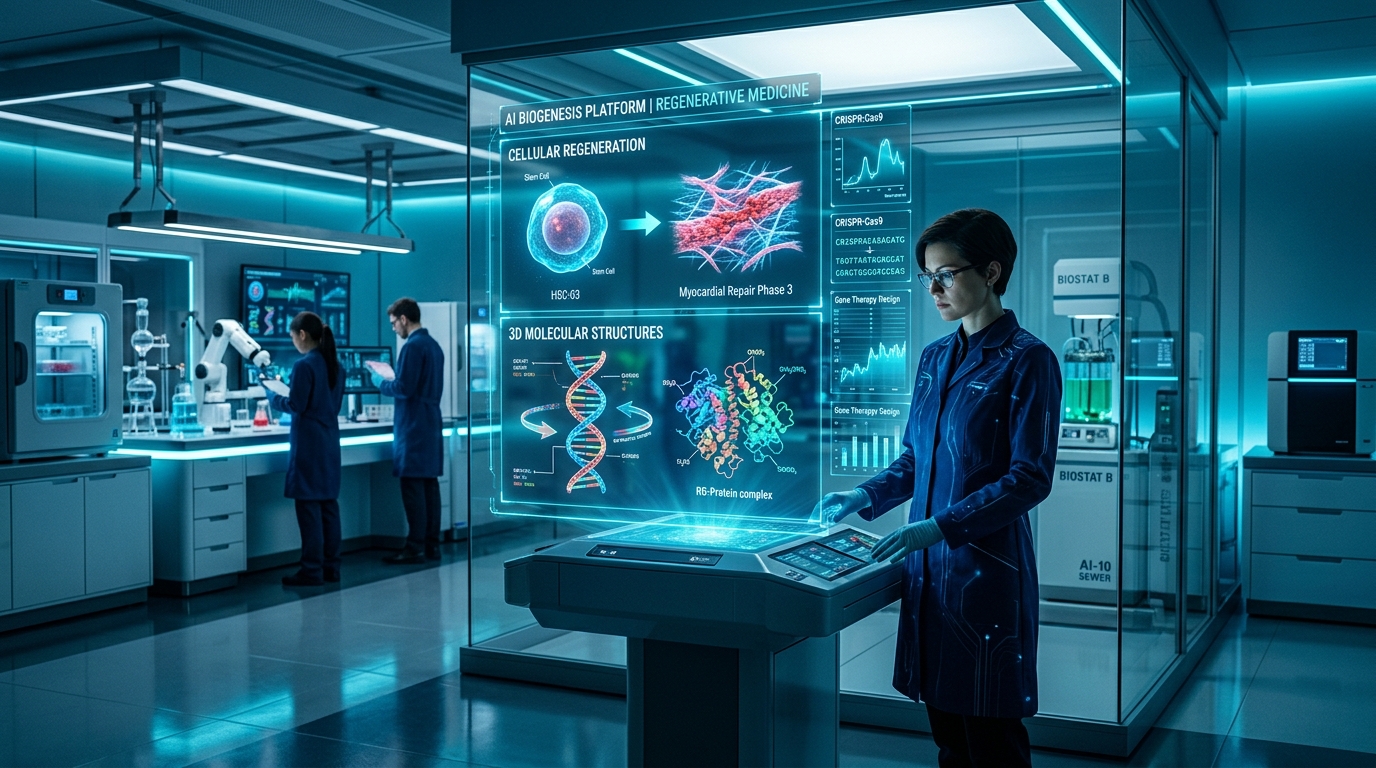
Bridging the gap between biological storage and electronic networks. We transform synthetic DNA into a standardized, low-cost, near-zero-energy archival utility for the world's cold data.
Analyzing the multi-billion dollar market transition to biological cold storage and comparing maintenance, energy consumption, and carbon emissions against legacy data centers.
Projected market capitalization in USD Billions driven by enterprise cold data retention mandates.
*Legacy maintenance covers mandatory tape rewrites every 3–5 years, hardware migration, and server rack upkeep. DNA offers 1,000+ year zero-maintenance retention.
*Legacy cold storage requires constant high-capacity HVAC refrigeration and server power. DNA rests inertly at room temperature with zero electricity consumption.
*Eliminating energy-intensive server cooling renders Verrascript DNA storage virtually carbon-neutral over multi-decade archival horizons.
Online hot wallets, cloud servers, and electronic key stores suffer billions in ransomware and breach losses. Verrascript zero-knowledge physical biological vaults eliminate network attack vectors.
Shrinking an entire molecular laboratory into a flash-drive sized hardware device holding DNA in a microfluidic chamber for portable, secure, zero-electricity data vaulting.
The Bio-Flash Drive™ pairs a plug-and-play USB interface with an internal microfluidic reaction chamber. DNA oligonucleotides are safely suspended in a protective chemical matrix or silica micro-beads within an ultra-durable chamber.
Hermetically sealed micro-well containing dry or fluidic DNA strands resistant to physical shock & EMP.
Standard USB-C connectivity with trusted client-side encryption chip for zero-knowledge key translation.
Integrated micro-scale nanopore sequencing array for rapid local data reading without external labs.
(US Patent App 19/189,507) Hardware-assisted file indexing for instant spatial bit access.
Synergizing microfluidic hardware devices, patented molecular file operating systems, and generative AI models for biotechnology.
Hardware device containing a sealed microfluidic reaction chamber. Stores gigabytes to petabytes of zero-knowledge private keys and digital vaults on DNA strands.
Hardware Specifications →(US Patent App. 19/189,507) The Molecular File System organizing spatial bit-addressing, directory structures, and dropout-tolerant Reed-Solomon storage.
Explore Molecular File System →Generative bio-transformer neural networks for single-cell transcriptomics, microRNA targeted therapies, stem cell transdifferentiation, and synthetic biologies.
Launch AI Studio →Authored by Dr. Reza Zadegan & Jorge E. Guerrero (US Patent App. 19/189,507). How the Molecular File System structures digital file trees inside DNA oligonucleotides.
Traditional DNA storage lacks an organized file system, requiring full sequencing of all strands to find a single file. The Molecular File System introduces hierarchical directory structures, spatial bit addressing, file allocation tables, and error-correcting metadata directly into molecular primers.
Test an interactive simulation of binary-to-nucleotide encoding for both Bio-Flash Drive chambers and Molecular File System cold vaults.
Pioneering biological transformer neural networks, microfluidic AI-in-the-loop screening, stem cell transdifferentiation, and miRNA biosensing.
How Verrascript converts digital files into Bio-Flash Drive chambers and recovers them error-free via the Molecular File System.
User data is encrypted locally on trusted client devices into dropout-tolerant Reed-Solomon base pair matrices.
(US Patent App. 19/189,507) Spatial file allocation tables format data blocks for microfluidic reaction chambers.
Oligonucletide strands are sealed in microfluidic reaction chambers inside portable Bio-Flash Drives™.
Integrated micro-scale nanopores read nucleotide states and reconstruct original files with 99.999% fidelity.
Compare traditional energy-intensive cold storage data centers against Verrascript Microfluidic DNA Hardware over multi-decade retention horizons.
*Models legacy magnetic tape/SSD refresh cycles, HVAC power consumption, and hardware migration costs vs zero-electricity microfluidic DNA storage.
Patents and peer-reviewed research authored by Dr. Reza Zadegan (Advisory Board Member) and Verrascript collaborators across molecular file systems, microfluidics, and AI for biotech.
Compositions, operating systems, and methods for a molecular file system providing spatial bit-addressing, file directory indexing, and automated data writing and reading architectures within nucleic acid nanostructures.
Compositions and methods for encoding and retrieving digital data within spatial locations of nucleic acid architectures (e.g. DNA origami breadboards) interrogated via super-resolution microscopy and error-correcting algorithms.
Demonstrating enzymatic data writing and rewriting on reusable DNA master tapes using targeted CRISPR base editors, eliminating de novo synthesis overhead.
Developing hybrid solid-state semiconductor and biological interfaces for mass archival data storage and dropout-tolerant error-correcting codes.
Engineered DNA nanostructures serving as structural breadboards for spatial bit positioning, molecular computing circuits, and nanorobotics.
Isothermal amplification techniques for ultrasensitive detection of microRNA targets and programmable therapeutics in regenerative medicine.
Verrascript, Inc. is guided by distinguished scientific advisors and pioneer inventors in nanoengineering, nucleic acid memory, microfluidic computing, and AI for biotechnology.
Verrascript, Inc. is commercializing the world's first plug-and-play Microfluidic DNA Flash Drive™, patented Molecular File System OS, and generative AI models for biotechnology. Accredited investors, institutional venture funds, and family offices are invited to request our confidential pitch deck and data room.
Targeting the rapidly expanding $350B+ global enterprise cold storage market with a 62.4% CAGR through 2035 as legacy tape and magnetic cloud facilities reach thermodynamic and capacity limits.
Backed by foundational patents across the Molecular File System (US App 19/189,507), Nucleic Acid Memory (US App 17/443,312), and integrated microfluidic nanopore reader hardware.
Monetization through Bio-Flash Drive™ hardware unit sales, recurring enterprise Molecular File System licensing, and AI for Biotech therapeutic co-development royalties.
Eliminates high-power HVAC chillers, server refresh cycles, and bit rot. Zero-electricity retention allows multi-decade archives to be maintained at a fraction of cloud cost.
All submitted investor information is transmitted directly to Verrascript executive leadership at info@verrascript.com.
Reach out to our team for Bio-Flash Drive™ hardware evaluations, Molecular File System licensing inquiries, or enterprise AI for Biotech collaborations.
4030 Wake Forest Road STE 349
Raleigh, NC, 27609, USA